Nicholas Clooney

Timeline / April 2026

April 2026 · Week 4

April 2026 22-28, 2026 · 9 entries

Nicholas Clooney

thoughts: Timeline as a permanent record

I’m really happy that I built the timeline feature into my blog, because it gives me an easy way to write about little moments and keep them somewhere permanent, platform agnostic, and accessible without any kind of paywall or login wall. The ProjectSpire SwiftUI card view WIP entry is exactly the kind of thing I wanted this for: a small progress record I can send to friends and family without needing it to be a full post or trapped inside a social feed.
Nicholas Clooney

wip: ProjectSpire SwiftUI card view

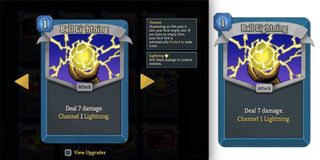
I’m recreating the Slay the Spire 2 card view in SwiftUI with assets extracted from the game, and I’m very happy with how close the first pass feels. The current work is captured in ProjectSpire snapshot/2026-04-28, especially CardView.swift; most of it is still hardcoded, but the visual foundation is there. Next I want to generalize it so the view can take a card data object and dynamically reload the text, colors, and assets, which might eventually turn into a Slay the Spire wiki app for the phone.

Comparison of a Slay the Spire 2 card in the game on the left and a matching SwiftUI card view on the right
Nicholas Clooney

note: Localization Formatters - Slay The Spire 2 Research Note

I published Localization Formatters - Slay The Spire 2 Research Note, a ProjectSpire note on how card localization formatter functions such as diff() are resolved and applied. GPT-5.5 researched and wrote the note, and I am honestly amazed by how well and how quickly it produced a detailed explanation from decompiled sources in minutes. This is exactly the kind of agent-assisted research loop that makes ProjectSpire feel much more possible.

Nicholas Clooney

blog: Three ways to pass an @Observable object in SwiftUI

I published Three ways to pass an @Observable object in SwiftUI, a short SwiftUI reference for choosing between environment injection, direct initializer passing, and @Binding. It keeps the distinction focused on ownership and coupling: whole-object reference sharing when the child is allowed to know the model, or a projected binding when the child should only see one value.

Nicholas Clooney

bite: Async debounce demo in SwiftyBites

I pushed 1263f2d to SwiftyBites as a Friday-night AsyncDebounceDemo for playing with Swift's async and sync edges. The demo compares a view-owned async .task flow with a synchronous button action that cancels and restarts a stored Task, which makes the debounce mechanics feel a lot more concrete than just reading the pattern.

Nicholas Clooney

blog: SwiftUI .task(id:) debounce update

I updated SwiftUI in the Wild: Memory, Concurrency, and the Gaps in the Docs with a clearer explanation of using .task(id:) for debounced work. The change moves that pattern into the debounce section, where SwiftUI's automatic cancellation model fits naturally, and keeps the button-action section focused on manual task ownership tradeoffs.

Nicholas Clooney

blog: SwiftUI in the Wild: Memory, Concurrency, and the Gaps in the Docs

I published SwiftUI in the Wild: Memory, Concurrency, and the Gaps in the Docs, a field guide to the parts of modern SwiftUI + concurrency that look clean in isolation but get messy in real apps. The post covers @State + @Observable lifetime bugs, debouncing with async/await, task ownership in views and buttons, closure capture cycles, and why @Observable and actor pull in different architectural directions.