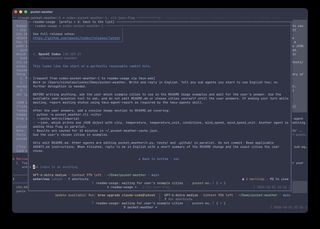
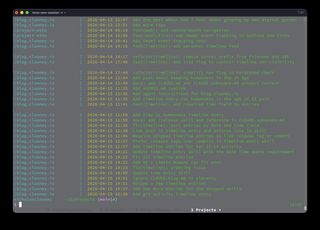
I released v1.15.0 of my skills. engineering-standards now asks for explicit argument labels and gains semantic code layout conventions, covering declaration ordering, enum projections and multiline Swift layout, in a new references/layout.md. wrap-up can now resume from HANDOFF.md after a clear, so the next session picks up the parked context instead of me pasting it back in. The Swift examples in behavior-tests are now generic rather than tied to one app.
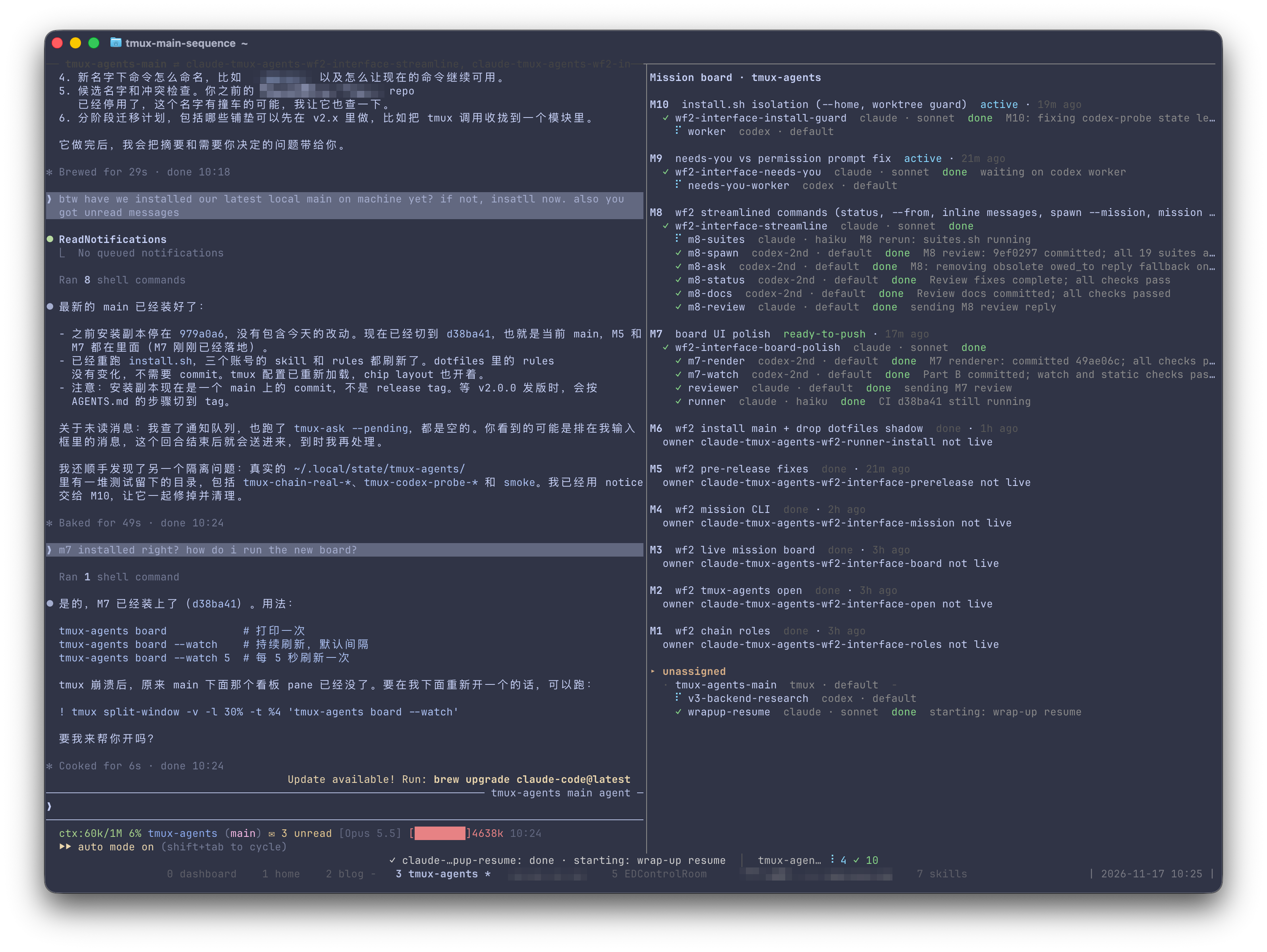
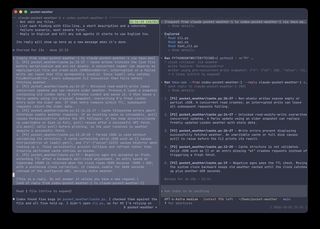
The main agent on the left, tmux-agents board --watch on the right. Click for the full size.
I'm rebuilding how my tmux-agents team works. The old main → secondary → worker chain burned most of its tokens on a secondary that never cleared its context and got the most messages: on the tmux-agents project alone, the secondary used 143M tokens to the main's 91M. Now there is one Opus main that only talks to me and decides, a short-lived Sonnet interface per mission that hands out the work, reviews it and lands it, then closes, plus Codex workers, Opus reviewers and Haiku runners for tests and CI.
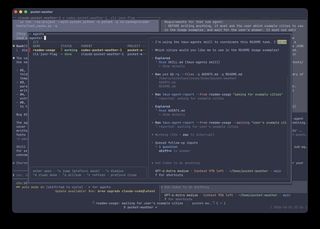
Each mission is a record managed with tmux-agents mission, shared across worktrees, and tmux-agents board --watch is a live, read-only pane that groups every agent under its mission with its model, state and progress. One glance and I can see the whole team.
It's part of a bigger push to trim the fat. A fresh Claude session used to spend about 50k tokens before I typed anything; after measuring and cutting unused tools, MCP servers and hidden skills, it starts at about 16k. And I wrap up, then clear far more often, so no agent drags 150k of scrollback through every request.
All of it is coming soon: role-based spawning, mission records, the board and a single tmux-agents status command will ship together as tmux-agents v2.0.0, with posts on the new team flow and on where my Claude tokens actually went.
I released v1.12.0 of my skills. The error-boundary rule in engineering-standards now says that when a boundary normalises a failure, it keeps the diagnostics that failure needs, in logs or error metadata as the boundary chooses. Intentional cancellation counts as lifecycle control, not a request failure the user has to handle. Typed errors owned by each layer stay as they were, and the rule still doesn't prescribe how to surface underlying errors, a universal cancelled case or a logging implementation.
I shipped v1.24.1 of tmux-agents to correct the digest's reading command to tmux-notes --all --keep-unread and tighten up recovery after clearing an agent's context. A short resume phrase restores the existing chain role, using a temporary, never-committed HANDOFF.md to choose what to continue. The main agent also checks and updates the new session's resume ID in main-sequence, waiting for Codex to finish its first turn before recording it. All 68 offline test suites, seven PR CI checks and the required probes on two Codex accounts passed; I've updated the local installation and status chip.
I released v1.11.0 of my skills. engineering-standards now has rules for what crosses a boundary: no enum that only mirrors domain cases to serialize them, a wire-format value only when it is a deliberate choice, named payloads when several values travel together, members grouped by responsibility in Swift's order, and a test rule to assert the final wire output. wrap-up now offers numbered choices for what to keep before a session clear, and parks the picked context in a local, uncommitted HANDOFF.md so the next session picks up where this one stopped.
I shipped v1.24.0 of tmux-agents, which adds quiet notes for the chatter between agents that doesn't need to interrupt anyone. tmux-ask --note leaves a note instead of pasting a prompt, and tmux-notes reads them with one read cursor per receiver; Claude gets an unread summary through its prompt hook and Codex checks at turn start. After five minutes idle (configurable), an agent gets a digest that continues from the last update until I speak, bare tmux-notes --count feeds status lines, and the "stopped without replying" reminder now arrives as a quiet note. The agent-chain rules also spell out what stays a reply, a request or a notice.
I released v1.9.0 of my skills. Every item in a design-lab gallery now has a short, stable ID in a chip with a Copy ID button, and each round's landing page lists every item with its ID. When the phone blocks the clipboard, the chip's text is selected and the page says "Selected, copy it". It came out of reviewing social preview cards from my phone, where pointing at "the third Glass card, the dark one" got old fast; now I paste C3-glass-series-dark back and the agents know exactly which one I mean.
I shipped v1.23.4 of tmux-agents, a patch release that makes clearing a session by hand a supported path. After /new in Codex, the next turn end with a verified agent ID rebinds the pane and its record to the new thread, so tracking and tmux-spawn --resume follow the latest conversation instead of staying stuck on working. Parents no longer get a "stopped without replying" reminder while a child is still working, and a new prompt or delivery clears the old activity label. In tmux-peers and tmux-connect --list, the COMMAND column now shows the agent kind (claude, codex or a Codex profile) and marks it (exited) when it has quit, instead of showing the shell that started it.
I wrote The Blog Themes I Would Never Have Built, and the Freedom to Be Picky about exploring eleven theme options while working on three to five other projects over a day of on-and-off work. It follows the design lab, the ideas I kept or dropped, and the theme switcher I kept refining with the agents. AI made trying cheap enough to take more possibilities seriously, but getting the design right still needed human judgement.
I shipped v1.23.3 of tmux-agents to fix spawned Codex agents appearing to be working while stuck at a folder trust prompt. Agents launched through tmux-spawn, including Codex profiles, now show permission, pause their work timer and tell their parent that the task has not started yet. The user still decides whether to trust the folder; nothing confirms it automatically. All 64 offline test suites, seven cross-platform CI checks and release probes on two accounts passed.
I shipped v1.23.2 of tmux-agents, a patch release that removes tmux-clear-context and the chain-reset skill from v1.23.0 and v1.23.1. Instead, I clear agents by hand and tell the main agent it is the main of an existing chain. The agent-chain skill now explains how a restarted main, secondary or worker finds its members with tmux-peers and re-briefs them instead of starting a new chain. install.sh removes the stale links. The fix that records Claude's new session ID stays.
I shipped v1.23.1 of tmux-agents, a patch release for tmux-clear-context. It now treats the dim suggestions and placeholders in Claude and Codex prompts, such as gray history ghost text or "Ask Codex to do anything", as an empty prompt, so idle agents can be cleared. If it refuses after typing the command, it erases the command again when that is safe; otherwise the error says the input was left as is. Refusals for a working agent now show how old the recorded state is.
I shipped v1.23.0 of tmux-agents, a minor release with a new command and skill. tmux-clear-context --from ME PEER clears a stopped Claude or Codex sub agent in place, sending /clear or /new while keeping its pane, name and connections. It refuses when the agent is working, in copy mode, mid-typing, has queued messages or has text in its prompt. Claude now records its new session ID at each turn start, so resume follows an agent across a /clear. The new chain-reset skill builds on it: after I clear the main agent, /chain-reset collects unfinished work, then clears and re-briefs the secondary and worker.
I released v1.8.0 of my skills. It ships two new skills: engineering-standards, the foundation I want every app to start from, and catch-up, which answers "catch me up" with only what changed since my last message. afk now briefs me on return in the same catch-up shape, and agent-docs keeps each SKILL.md to the minimal core, with everything else in linked reference files.
I added catch-up to my skills in b40a054. I come back from a break or a flood of agent notices and ask "catch me up" or "cmu". I want only what changed since my last message, concise and in a fixed shape: what landed, what is pending or blocked, and a decision only if one is needed. Long recaps bury the decision and repeat messages I can already read, so the skill also rules out preamble, tool narration and restating what's already on screen.
description: Brief the user on what changed since their last message, in a fixed shape. Use when the user says "catch me up", "cmu", "since my last message", "what happened", 发生了什么 or 进展.
---
# Catch up
Cover only what happened after the user's last message. Use these parts in order, omitting any part with no content:
1.**Landed:** what landed and the state now.
2.**Pending:** what is pending or blocked.
3.**Decision:** a decision the user must make, as one question with options.
Use one or two sentences per part. Concise means shape and density. Do not restate messages the user can read directly, such as a secondary's replies in a chain; do not narrate tool calls. No preamble or closing.
"What are you doing / why is it slow" is not a catch-up: answer that first in one or two sentences, then continue the work.
I added engineering-standards to my skills in 8329df9. I want every app I build to start from the same foundation: simple objects, strong single responsibility, strong boundaries, full dependency injection, and state and logic you can test. Writing it down once means agents build to that standard by default, instead of me re-explaining it on every project.
Five core rules up front.SKILL.md holds them, each a principle with its Swift form; 17 more rules sit in three reference files (structure and dependencies, screen state and presentation, tests) loaded only when needed.
Fake the world, keep my layers real. Tests replace only the outside world; canned values at a unit's own injected functions are fine, recording mocks are out.
Precise values stay precise. Money and similar values use a decimal type parsed from strings.
description: Build and review app code to a fixed set of engineering standards (simple objects, single responsibility, strong boundaries, full dependency injection, testable state and logic), each stated as a principle with its Swift or SwiftUI form. Use when designing or reviewing app architecture, wiring dependency injection, writing view models or view states, mapping network responses and errors into domain types, applying code layout conventions, or when the user says "our standards" or "to our engineering standards".
---
# Engineering standards
Principle first, then the Swift form as one example; in another language, use its plainest idiom for the same rule. Test shape, doubles, factories and fixtures are in the `behavior-tests` skill; the rules in the tests reference add only what that skill leaves open.
## Core
1.**Simple objects.** Values and functions before classes and interfaces. Domain and view-state types are immutable values; computation is pure functions grouped by topic. A class only where mutable, observed state lives (the view model); an interface only for a real boundary, never one interface and one mock per dependency. Swift: `let`-only structs and enums, `static func`s on a `nonisolated enum`, one `@Observable` class per screen.
2.**Strong single responsibility.** One type, one job, named after the job. Networking alone is four types: configuration (base URL, version), endpoints (paths), client (fetch and decode), mapper (wire type to domain). The reverse holds too: actions that share one piece of state stay in one type instead of being split to shorten it.
3.**Strong boundaries.** Each layer speaks only its own types, and raw data stops at the edge. A weather DTO holds the server's strings; the repository maps it to a `Forecast` with typed temperatures; every failure becomes the layer's own error before it crosses. Callers consume capabilities (`fetchForecast`), never construct lower layers. A view sees view states, never a DTO or the client.
4.**Full dependency injection.** Every side effect (network, stored data, a delay's length) is passed in at construction with no default, so a caller can't forget it and a test can't be fooled by a built-in. One composition root: the entry point reads the configuration switches and builds the live wiring as locals in one function; preview or demo wiring is a second set that doesn't ship. Nothing below the root reads a global. Time and delays are injected only when a test needs to control them; a presentation delay doesn't earn a clock. Swift: `@Sendable` closures in `init`; `Dependencies+Live.swift`, and `Dependencies+Preview.swift` behind `#if DEBUG`; no `URLSession.shared` outside the root.
5.**Testable state and logic.** State is a value you can assert on: one state enum with payloads, readable by all and written only by its owner's actions. Logic is a pure function whose inputs (locale, units, the loaded data) are parameters, so a test needs no environment. Tests drive the real types through the user's flow and fake only the outermost boundary. Swift: `enum State: Equatable`, `private(set) var state`, `#expect(viewModel.state == .loaded(expected))`.
## Reference
- Read [structure.md](references/structure.md) when separating view models from view states, wiring dependencies, defining configuration, concurrency, validation and error boundaries, choosing request serialization or boundary payloads, naming functions and their argument labels, grouping members and function stages, or choosing enum projections versus behavioural pattern matching.
- Read [layout.md](references/layout.md) when formatting multiline conditions, arguments, parameters or nested calls.
- Read [screen-state.md](references/screen-state.md) when deriving screen state, formatting values, guarding async actions, extracting components or documenting escape hatches.
- Read [tests.md](references/tests.md) when choosing test boundaries, recording fixture provenance, covering screen states offline or verifying request wire output.
## Done
Each changed type has one job and a name that says it, every side effect enters through its initialiser, every new boundary has its own types and error, and each behaviour has a test that reads as the user's flow with only the world faked.
I released v1.4.1 of my skills. It ships design-lab, a private lab for comparing mockups and image rounds on one phone-friendly index before building anything. Its local server never serves hidden files or directory listings, with offline tests in the release checks, Tailscale is now optional, and dark screenshots set the colour scheme explicitly so they no longer depend on the Mac's own appearance.
I shipped v1.22.0 of tmux-agents, a minor release with new options. Rows in a tmux-agents main sequence now accept command=CMD: the window opens at the project directory, runs the command in the configured shell, and keeps an interactive shell afterwards even if the command fails. add, set and unset edit the field. I use it to start the Agent Fleet Command server alongside the other windows. The agent-chain skill also gains an optional Fleet Command section: when the fleet-command CLI is installed, chains follow the missions skill, with the main registering missions, the secondary reading the inbox and owning status, and the worker logging progress. Without it, chains behave exactly as before.
I added design-lab to my skills in 549cfa8. With how easy it is to try things with AI agents, I like to experiment with designs, and this skill captures the lab I ran while redesigning this blog's themes: every mockup round, image round and verdict on one private, phone-friendly index, before any real code.
Nothing reviewed gets overwritten. Each revision is a new folder next to the old one, so I compare against what I actually saw.
Verdicts are my words. Loved, Approved, Not picked and Dropped are only recorded when I say so, and each one lands in the gallery, the index and the plan at the same time.
Phone first and private. Every page is checked at phone width in light and dark, served from a no-store local server on 127.0.0.1, shared over my tailnet only when one is available.
A finalists view with a side-by-side compare mode helps pick a default once most verdicts are in.
description: Run a private design lab for a project, with throwaway mockups and image rounds on one phone-friendly index the user reviews on their phone or the same machine, ending in a decision recorded in the plan. Use when the user wants to explore visual directions, themes, mockups, covers or image options before building, asks for a lab, a gallery, a revision round or a finalists view, or says 设计实验室 / 出几版看看.
---
# Design lab
The lab answers "which direction?" before any real code. Its output is a decision written in the plan doc, never production code. Everything in it is throwaway.
## Rules
-**Private and uncommitted.** The lab lives in a gitignored, build-ignored drafts folder (e.g. `local-drafts/lab/`). Check both ignores before the first file. Nothing in it reaches git, a build, a push or a message to another project.
-**Serve only what is visual.** The served root holds the index plus symlinks to mockup and image folders; never drafts, notes, `.temp`, `.env` or secrets. Bind to 127.0.0.1 with caching off. If a tailnet is available, use `tailscale serve` for phone review; otherwise review on the same machine at 127.0.0.1. Never bind to 0.0.0.0 or substitute a public tunnel.
-**Never overwrite a reviewed version.** A revision is a new folder next to the old one (`x-r2`, `x-r3`, `paper-contrast-a/b/c`, `dark-aurora`, `dark-indigo`). The user compares against what they saw.
-**Phone first.** Check every page at 390px: one column, no horizontal scroll. Every mockup in light and dark unless it is declared single-scheme. Record body and label contrast ratios (aim for 7:1 body text) in each round's notes.
-**Verdicts are the user's words.** Badges: Loved, Approved, To review, To pick, Not picked, Dropped, On hold. Never mark anything approved, picked or dropped unless the user said so; quote them in the note. If a verdict is ambiguous ("aurora indigo": one palette or two?), confirm before recording it.
-**Image rounds.** Unless the user gives an art direction, let the model choose and vary styles. Save every prompt in `prompts.json`. No text, logos, trademarks or personal details in images. Note the target crop ratio (e.g. 100:56) and check each image in that crop. Record each rejected round with the user's reason ("too close to X's style") so the next round avoids it.
-**In an agent chain:** the main relays verdicts as notices and revision asks as requests; answer each revision round with one batched reply holding all links.
## Ops
1.**Start the lab.** Run [scripts/serve-lab.py](scripts/serve-lab.py) `<lab dir> [port]` in the background. With a tailnet, optionally run `tailscale serve --bg --https=<port> <port>` for phone review; otherwise use `http://127.0.0.1:<port>` on the same machine. Done: the tailnet URL loads the index on the phone, or the loopback URL loads it locally; in either case, a reload after an edit shows the edit.
2.**Create the index once.** Copy [references/lab-index-example.html](references/lab-index-example.html) to `<lab dir>/index.html` and replace its sample rows. One row per experiment of any kind (mockups, image rounds, covers): title, date, status, note with verdicts, thumbnail. Done: every experiment the user has seen is a row.
3.**Add an experiment or round.** Build it in its own folder, symlink it into the lab root, add or update its row. Done: the row links to it, its thumbnail loads, and it passes the phone and light/dark checks.
4.**Build a gallery** for a round with several items, following [references/gallery.md](references/gallery.md). Done: it opens with "To pick / review", every item shows what changed since the user's last review and a stable ID with Copy ID, the round landing page lists every item with its ID, and links work.
5.**Record each verdict** in the gallery badge, the index row and the plan doc in the same step. Done: the three agree.
6.**Finalists view** once most items have verdicts: only final picks, no before or unpicked versions, plus a compare mode (same page across all finalists, light/dark, desktop/phone) for choosing a default. Done: linked from the gallery top and the index.
7.**Close out.** Write the decisions in the plan doc, mark everything else Not picked or On hold with the reason, and hand the agreed plan to implementation. Done: no row is left "waiting" without saying what it waits for.
## Failure modes seen
-**Stale cache hid new rows.** The fix is the no-store server; never serve the lab with a caching server.
-**The index showed only one kind of experiment.** Image rounds and mockups both need rows; nothing reviewed may exist only in chat.
-**A "kept" verdict assumed from silence.** Without the user's words it stays To review.
-**Copying instead of taking inspiration.** When the user points at a reference style, ask what to keep from it; a round that copies the reference gets rejected.
-**Agents left to decide the art direction** produced rounds nobody picked. After two unpicked rounds, stop and ask the user for direction instead of generating more.
I shipped v1.21.2 of tmux-agents, a patch release with two fixes. tmux-peers no longer prints a stale "closed by user" hint when a live connected agent has reused a closed agent's name; the closed agent's saved conversation is still kept for --resume. And tmux-connect --list and the picker now mark and order the caller's own window correctly when sessions share linked windows (grouped sessions), by matching window ids instead of session:index.
Today, from a conversation on my phone, an agent fleet mocked up more than eleven design directions for this blog in an afternoon: Terminal, Brutalist, Warm Paper, Swiss, Soft Glass, a retro web zine, Liquid Glass in dark and light, and three takes on sci-fi. I'd say what I liked and what felt weak, and a few minutes later there were new options to look at.
On my own, I would never have even imagined doing eleven themes. One, maybe two, over a few weekends. Now I love all eleven, and they're all going forward.
So that's the plan: these become the v2 themes, readers get to pick the one they like, and they go back into 11ty Subspace Builder so every site built on it can use them too. The current looks become v1, and they'll be sunset.
I updated Vision Pro MVD / ALVR Best Practices - No More Stuttering!: the network carries four flows, not two. Besides ALVR and MVD to the headset, Parsec and the EDControlRoom hub and peer talk between the PC and the Mac. Those two stay on Ethernet through the VR router and use no airtime, so the post now lists all four, the network diagram shows the wired links, and the Parsec check ties back to them.
I shipped v1.21.1 of tmux-agents, a patch release. install.sh now writes relative symlink targets when both the link and its target live under the home directory, so reinstalling keeps dotfiles-tracked skill links like ~/.codex-2nd/skills/* clean, and links that are already correct are left alone. It also fixes an intermittent preview-header test.
I shipped v1.21.0 of tmux-agents, which replaces the request ledger with turn state. A running turn shows as working and an ended turn shows as idle or done, while parents show live "waiting on" text from their nearest working descendants. Replies no longer need a request ID, and a one-slot stop notice remembers the latest requester. tmux-spawn also passes agent CLI arguments after --, saves them with the sub agent and brings them back on resume.
I published Everything All At Once: AI & Intentionality, which grew out of an evening thinking entry after a day of running an agent chain in every tmux window. With AI I can push four or five projects at once, but the bottleneck is still my own brain, and handing more decisions to agents means less of what I do is something I actually meant. The post is about noticing when that happens, and choosing, on some days, to slow down and stay with one or two things long enough to remember why each decision was made.
Today was a busy one. Every tmux window had an agent chain working at the same time, and by the evening there were about 85 commits across six repos.
My skills went public. I moved them out of my dotfiles into their own repo, TheClooneyCollection/skills. You can install them as a Claude Code or Codex plugin, or with npx skills. v1.0.0 went out in the morning and v1.2.0 by the evening. Along the way I added three new skills, and every skill got a README and a one-line reason for existing.
A stutter fix became a post and a skill. ALVR on my Vision Pro kept stuttering. It came down to AWDL channel hopping, and moving the router's primary channel to 44 fixed it. That turned into a post, a skill, and a new Gaming series.
Illustrating the post became a skill too. Claude drew the diagrams, Codex generated illustrations in three different styles, and I picked from one gallery page. That's illustrate-post now.
tmux-agents shipped twice.v1.19.0 and v1.20.0, then a design doc in the afternoon about how it tracks what each agent is doing.
The rest kept moving. My dotfiles caught up with all of the above, and EDControlRoom got a few late-night ideas.
With AI, it almost feels like you can do anything. I could never have dreamed of working on three, four, even five projects at once. But ever since AI became this capable, I've found myself working like this every now and then. It feels less like coding and more like running a small studio. Tiring, but the good kind of tired.
But I keep coming back to one question: was I spending that time and energy intentionally?
I did decide a lot today: what to ship, what to cut, which image, when to push. But I also gave the agents a lot of room to decide for me. Sometimes I didn't have the energy. Sometimes I couldn't be bothered. Sometimes I just didn't mind. (I wrote more about where that line sits in The Two Extremes of AI-Assisted Engineering.)
That's a trade-off, and it's fine, as long as you, the one deciding, are okay with it.
Still, I think this is what AI is quietly taking away from us: intentionality. When you can do everything at once, it gets easier to stop asking whether you meant to. There's less of it than there used to be.
I want to notice when that happens. And when I have the energy to give, I want to be more intentional myself. Maybe slowing down once in a while isn't such a bad idea either.
I released v1.2.0 of my skills. It ships two new skills: illustrate-post, which turns a post's images into a plan, hand-drawn SVG diagrams, image-model variants in a few styles and one gallery to pick from, and avp-mvd-alvr-stutter-resolver, which fixes Vision Pro stutter when Mac Virtual Display and ALVR run together. Every skill folder now also has a short README for people: what the skill does, why it exists, when to use it and what it needs.
Plan first. The agent reads the post and proposes the images with me: what each one shows, where it goes, and whether it is an exact diagram or a mood or hero image. Nothing is generated before I approve the list.
Two kinds of producer. Claude hand-draws the diagrams as SVG, where labels and numbers have to be right, each with a dark twin. An image model renders every concept in 3 or 4 clearly different style families, so each family is a consistent set.
One gallery. Every variant lands in one local HTML page, side by side. I pick per image and mix styles freely; when I like a composition but want a change, the agent edits that image instead of starting over.
Only the picks land. The chosen images go into the post, narrower than the text and centred, with SVG diagrams swapping to their dark twins with the site theme.
The Vision Pro post ended up with three of Claude's diagrams, two Midnight Blueprint illustrations and one Paper Circuit floor plan, picked out of a gallery of more than twenty images.
description: Illustrate a blog post or doc with image variants from several models, shown side by side in one HTML gallery for the user to pick from. Use when the user asks for images, illustrations, diagrams or a hero image for a post or doc, or wants image options to choose from.
---
Several producers each make a **variant** of every **concept** (one image slot in the post); the user picks per concept from one gallery, mixing producers and styles freely. Nothing enters the repo until they pick.
1.**Plan.** Read the post and propose the concepts: what each image shows, where it goes, and whether it is a diagram (exact labels, numbers, real data) or a mood or hero image, and whether it carries text. Name who makes what. Done: the user approved the list; nothing is generated before that.
2.**Produce, in parallel,** into a gitignored folder: `.temp/<topic>-images/<variant>/NN-<concept>.<ext>`. Check `.gitignore` covers it.
-**Diagrams: hand-drawn SVG by Claude.** Self-contained, with its own background card, plus `<title>` and `<desc>`. Make a dark twin, `NN-<concept>-dark.svg`: remap the palette, keep the meaning of each colour readable. Render both to PNG (`rsvg-convert`), look at them, fix overlaps and clipped text, repeat. CSS `text { fill }` beats a `fill=` attribute, so colour single elements with `style="fill:..."`.
-**Every concept: an image model** (Codex's image tool, or another agent's; without one, hand this to an agent that has it). Ask for 3 or 4 clearly different style families, each applied to every concept so a family is a coherent set; leave the rest of the art direction open. Save each family's prompts in `<variant>/prompts.json`.
- Generated images: no logos or trademarks, generic devices, no personal details. Text follows the plan, concept by concept. Models garble it, so ask for short, explicit wording, verify every word and number, and regenerate anything garbled.
Done: every producer delivered its files.
3.**Gallery.** Copy [gallery.html](gallery.html) into the folder and fill its `concepts` and `variants` lists. Serve it with `python3 -m http.server <spare port> --bind 127.0.0.1`. To browse from another device, offer the user's private network (e.g. `tailscale serve`) and ask first. Done: the URL loads and every image shows.
4.**Review and pick.** Each producer lists its own weak spots. Send the user the gallery link with those notes. When they like an image's composition but want a change, edit that image (an image edit with it as the reference) rather than generating a new one. Done: the user picked one image per concept.
5.**Land the picks.** Copy only the chosen images into the repo (check whether it keeps images in Git LFS) and wire them into the post:
- Show images narrower than the text column and centred, around 560px, a hero around 640px. A hero can close the post too.
- An SVG with a dark twin goes in as two `<img>`, one per theme, swapped by one shared CSS rule keyed on the site's theme selector or `prefers-color-scheme`.
- Image pipelines may rasterise SVGs (JPEG with black corners); route SVGs around the transform.
Build, then look at the post in both themes and commit. Ask before pushing. Done: the build passes, both themes look right, and only the picks are committed.
I published Vision Pro MVD / ALVR Best Practices - No More Stuttering!, about running Mac Virtual Display and ALVR on an Apple Vision Pro at the same time while playing Elite Dangerous in VR. ALVR stuttered even on a clean channel, because AWDL kept pulling the Mac's radio onto its own social channel; putting the router's primary channel on AWDL's channel (44 in the UK) stopped the hopping, and the ALVR retest confirmed the stutter is gone. The post walks through the network layout and router settings I recommend, and links the avp-mvd-alvr-stutter-resolver skill for anyone who wants an agent to check their setup.
I added avp-mvd-alvr-stutter-resolver to my skills in 197e34a, turning what I wrote up in Vision Pro MVD / ALVR Best Practices - No More Stuttering! into something an agent can run. It audits and fixes Apple Vision Pro stutter for Mac Virtual Display and ALVR: AWDL channel hopping, the router's channel and width, the wired path, subnets and GPU encoder contention. The fix is verified twice: the AWDL schedule now stays on a single channel, and ALVR no longer stutters.
My own agent skills moved out of my dotfiles into skills, and v1.0.0 is the first release. You can now install them without my setup: as a Claude Code plugin, a Codex plugin, or with npx skills add TheClooneyCollection/skills. The release also adds a release skill, which cut this release, and a CI check that keeps the skills, the plugin manifests and the README in step.
I shipped v1.20.0 of tmux-agents, which moves my project launchers into tmux-agents itself. tmux-agents main-sequence opens the configured project windows in order, with optional names and plain shells, and tmux-agents chain picks a project from the current directory, the saved projects or an optional scan root. The config is editable with list, add --at N, set and unset, with nothing personal hardcoded. tmux-agents start chain --main-resume ID resumes just the main conversation, with Claude reconnecting Remote Control through /rc, and sub agents spawned by a profiled Codex agent now inherit that profile, including on resume.
I shipped v1.19.0 of tmux-agents, which makes long messages explicit: tmux-ask and tmux-spawn take --message-file, so an agent sends a summary plus the full text, the recipient reads it with tmux-read <id>, and automatic truncation is gone. Agents now get resume hints and can resume in place with tmux-spawn --resume --here, and a requester is notified when a sub agent stops without replying, replacing "reply overdue". Claude hooks are hardened, with StopFailure handled, tool hooks clearing permission waits, and AskUserQuestion and MCP input dialogs marking "needs you". Resumed Codex agents are tracked, finished agents keep their last report, ownership survives a gone ancestor, and a new probe checks Codex compatibility.
I published The Two Extremes of AI-Assisted Engineering: Fast and Furious, vs. Slow and Careful, about the two opposite ways I work with the same coding agents: letting them run while I barely read the code, and slowing down until every decision is mine. It uses EDControlRoom as the example of a project moving along that spectrum, and argues that the real decision is where to set the quality bar for each project right now, and when to move it. This is the third version; I wrote it section by section after setting two earlier drafts aside.
I clear my agent sessions a lot now. Long sessions get slow and expensive, and after a while the agent is mostly rereading old tool output. The thing that kept me from clearing was the worry that something useful would go with it: a gotcha we hit, a decision and the reason for it, a half-finished branch.
So I wrote a small skill called wrap-up. Before I clear, I say "wrap up" and the agent goes through the session and reports back. It changes nothing until I choose.
Lessons not yet written down. Corrections I made, gotchas we found, decisions and why. It checks the repo docs, AGENTS.md, skills and memory first, and leaves out anything already there or obvious from the code.
Where each one should go, with the exact wording. An AGENTS.md rule, a repo doc, a skill, or personal memory, plus one line on why.
What it would skip, and why. I can overrule it, and it stops the notes from slowly piling up.
Unfinished work. Running agents, open worktrees, uncommitted or unpushed changes, questions I never answered.
I pick the ones I want, it writes them, and I clear. Sometimes the answer is "none of these". The agent can work them out again quickly, and a note that is never needed is just more to read next time.
What I get out of it: clearing becomes a habit instead of a gamble. Sessions stay short and cheap, and the next agent starts from what was actually learned, not from 200k tokens of scrollback.
description: Before the user clears the session, report what is worth saving and what is unfinished; after the clear, resume from the handoff. Use when the user says they will clear, reset or end the session, or says 收工 / 要清 session 了; or, after a clear, says "cleared, resume please", "cleared resume" or 清完了,继续.
---
Change nothing until the user picks.
-**Number the choices:** separate completed work worth recording, unfinished work that could continue, and live state that needs attention (background jobs, agents, worktrees, uncommitted or unpushed changes). Ask the user to choose what to save, continue or drop by number. Unselected old work stays pending, never resumes automatically.
-**Lessons not yet recorded:** user corrections, gotchas found, workflows explained only in chat, decisions and their reasons. Check repo docs, AGENTS.md, skills and memory first; drop what is already there or readable from the code. Also drop anything you got right on your own or caught yourself this session; keep only what would likely go wrong again without a note.
-**For each, propose a home and the wording:** an AGENTS.md rule, a repo doc, a skill, or memory (personal preference or setup), with one line of why.
-**List what you would skip,** with the reason, so the user can overrule.
-**After the choice:** save approved lessons to their agreed homes. Write information needed across a clear to the project-root `HANDOFF.md`: goal, roles and member names, relevant branches and worktree paths, live state, and the user's explicit choices, then a fixed "Resume steps" section: the commands the next session runs first (project-specific; none if nothing applies). Work not explicitly chosen to continue is listed only as pending selection.
-**Local handoff only:** before creating or updating `HANDOFF.md`, verify it is untracked and add `/HANDOFF.md` to the repository's local Git exclude file (`git rev-parse --git-path info/exclude`), not shared ignore rules. Never commit it. If already tracked, report the conflict before writing. Read any existing file first and preserve other chains' and the user's content.
-**Clear entries when resolved:** remove an entry only when completed, explicitly dropped, or transferred to a persistent record the user approved. Delete the file when every entry is resolved; reading it alone is not grounds for deletion. Leave unresolved entries for the next session.
-**Resume:** after a clear, read `HANDOFF.md`, run its Resume steps, then report the next actions to the user. Do not re-brief other agents or restore roles unless the user asks.
I've been spending the day refining EDControlRoom, building new features, polishing little details, improving the README, and even getting a new logo designed that I'm particularly happy with.
And I had this wonderful realization: my little side project is growing into a mature product.
It has a name, an identity, a proper interface, documentation, tests, releases, cross-platform support… It's no longer just a bunch of code I wrote to solve a problem. It's becoming something real. Something I'm genuinely proud to put out into the world.
There's a particular kind of happiness in this.
It's not just the excitement of getting something to work. It's the satisfaction of ownership and craftsmanship. Taking an idea from your head, bringing it into existence, and slowly shaping it into something thoughtful, polished, and complete.
It reminds me of woodworking, actually. That feeling of starting with a sketch, working with your hands, refining every little detail, and eventually stepping back to admire something that didn't exist before.
I love that with my own projects, I get to decide what deserves attention. What good engineering looks like. What makes a good user experience. How far I want to take an idea.
Just me, my curiosity, my ideas, and the joy of making things.
I think I've missed this feeling more than I realized.
And today, looking at that beautifully polished README, the new logo, and all the little features coming together, I just feel… happy.
Not because I've achieved something enormous. Not because it's going to make money or change the world.
But because I made something, I care about it, and I love what it's becoming.
I shipped v1.18.0 of tmux-agents, which tracks completion per request: each tmux-ask request resolves when its own reply arrives, whoever asked, so answering an agent other than its parent no longer leaves the receiver working or falsely showing "needs you". A delivered request with no observable progress for 30 minutes now shows "reply overdue" on the receiver, with a configurable timeout separate from "needs you". When an agent in a tmux-spawn --split pane exits, the pane returns to the default shell with its original environment; @tmux_agents_sub_exit keep preserves the old dead-pane behaviour. Any tracked agent, including a top-level main, can now use tmux-agent-report --needs-you "reason" to ask for me explicitly, with the reason shown in the chip and agent list.
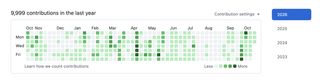
A lucky moment to catch: 9,999 contributions in the last year.
Caught my GitHub contributions at exactly 9,999 in the last year today. Wasn't aiming for it. What a number to catch!
I pulled the public-repository breakdown a little later, by which point the total had reached 10,017. This API snapshot covers October 19, 2025 at 00:00 through October 20, 2026 at 23:59:59, London time (BST at both boundaries). The 27 public repositories below account for 7,889 contributions; this is not a breakdown of the earlier 9,999 in the screenshot. These counts include commit, pull request, and repository creation contributions.
Public-repository subtotal across all 27 repositories: 7,889 contributions.
The 4,743 commit contributions for my blog stand out. I write and push frequently, but I suspect the bigger factor is how I keep it in sync with Subspace, which the blog is based on: whenever Subspace updates, I rebase the blog and force-update it. Rebasing changes commit IDs, and my guess is that GitHub may be counting rewritten commits as new contributions. That's a personal hunch, not a verified explanation of GitHub's counting mechanism, and I wouldn't read that number as 4,743 distinct pieces of new work.
I shipped v1.17.0 of tmux-agents, which adds command mode to shell popups: prefix + C-s now opens an fzf picker over saved fish, bash or zsh history, or lets me type a new command, then runs it in a hidden pane shown in a popup; the plain shell moves to prefix + S. A successful command shows ok and closes after a three-second countdown unless I press any key to keep it, while a failed command stays open in a shell, and prefix + a lists each command as running, ok or failed N until cleared with ctrl-x. Agents can use tmux-shell --from NAME --command CMD, and shell popup startup is about twice as fast, with the tool's work before the shell starts down from about 290 ms to 140 ms. The history picker uses fish's own history and Perl without Python, and start chain --help is fixed too.
I shipped v1.16.0 of tmux-agents, which lets scripts such as my dotfiles' tmux-chain delegate chain window creation with tmux-agents start chain [DIR] --target session[:index] --name NAME. --target creates the window detached in an existing session, even from outside tmux, and a bare session name picks the next free index. --name sets the window name, defaulting to the directory basename, and the window's automatic-rename and allow-rename options are off before the agent starts. On success, the command prints exactly the new pane ID.
I shipped v1.15.0 of tmux-agents, which adds shell popups: prefix + C-s or tmux-shell opens a plain shell in the hidden project session, with the shortcut configurable through @tmux_agents_shell_key (none disables it). prefix + d detaches the popup while the shell keeps running, and prefix + a lists it as a shell, with Enter to reopen and ctrl-x to close. Agents can open owned shells with tmux-shell --from NAME, which close with their owner, and agent messages can never be typed into a shell. exit removes the shell, with nothing resumable and no separate command log.
I published Codex Brain, Claude Harness: Running GPT-6-Astra in Claude Code, about running Codex models inside Claude Code through a local CLIProxyAPI and six fish functions in my dotfiles. The API key lives only in 1Password, which is what lets the functions sit in a public repo. The post also covers how two agent chains built it across projects, a small auto-approve accident, and what's still missing compared with Claude: artifacts and Claude in Chrome.
I shipped v1.14.0 of tmux-agents, which adds limited support for other coding agents. Any executable on PATH, such as gemini, opencode or aider, now works wherever tmux-agents takes an agent: tmux-agents start, tmux-spawn and the chain roles. Claude, Codex and Codex profiles keep full features. Other agents get panes, naming, connect, peek, dismiss and tmux-ask messaging, but no automatic tracking, worked time, resume or permission setup, and their first task is sent manually once they reach their prompt. The new docs/agents.md has the feature table and welcomes PRs that add full support for more agents. One behaviour change: a single bare first word to tmux-spawn is now read as the agent to launch.
I shipped v1.13.1 of tmux-agents, a small fix for install.sh: it now keeps a command or skill link that already points to the installed copy, such as a relative link tracked in dotfiles, instead of rewriting it as an absolute path on every upgrade. Links pointing anywhere else are still replaced.
I shipped v1.13.0 of tmux-agents, which makes the agent chain's roles configurable. Each of the three roles (main, secondary, worker) can now be Claude, Codex or a configured Codex profile, per launch with tmux-agents start chain [DIR] --main/--secondary/--worker AGENT, or lastingly through the @tmux_agents_chain_* tmux options or TMUX_AGENTS_CHAIN_* env vars. The defaults stay Claude, Claude and Codex, a preference in CLAUDE.md or AGENTS.md still wins, and a Codex main or secondary now works. A new read-only tmux-agents chain-config [--sources] shows the role choices new chains start from and where each came from. To upgrade, rerun ./install.sh to refresh the copied Codex rules and add the Claude allow rule Bash(tmux-agents chain-config:*).
I published Start the Chain: My Three-Agent Setup Is Now One Command, a follow-up to the main agent post. The main agent, secondary and worker setup is now the agent-chain skill in tmux-agents, started with one command, and the post covers what changed with a week of real use and how projects talk to each other. It also covers what happens after a restart: tmux-main-sequence brings back a chain for every project, and /resume brings back the conversations that matter.
I shipped v1.12.2 of tmux-agents, a patch release with two fixes that bring behaviour in line with the docs. Renaming and auto-naming now keep the agent kind prefix for agents started with tmux-agents start, so renaming a chain's main to main gives claude-tmux-agents-main instead of tmux-agents-main, and Codex profiles consistently use codex-. Top-level agents, like a chain's main, now go idle when they finish a turn with nothing pending instead of showing amber "needs you", which stays for sub agents and members.
I shipped v1.12.1 of tmux-agents, a small fix for tmux-agents start in a named pane: when you run it from that pane's own shell, it now takes over the pane, keeping its name and connections, and --name renames it first. Before, it refused to start from any named pane.
I shipped v1.11.0 of tmux-agents with long-lived members (tmux-spawn --member), which the agent-chain skill now uses for its secondary and worker instead of sub agents. The agent list is calmer: a fixed name column, compact names, time in state and worked time per agent, plus a pinned preview header with full activity and scrolling that pauses follow. The list now requires fzf and gives clear install instructions when it is missing; there is also a new configuration guide and an updated quick start. After updating, reload the tmux config with tmux source-file ~/.tmux.conf so the new hooks can save worked time and mark removed panes closed.
I shipped v1.10.0 of tmux-agents with one shared skill for Claude and Codex, installable with npx skills add TheClooneyCollection/tmux-agents -g, and a new agent-chain skill for “start the chain”: main, secondary and worker side by side. The installer now handles Codex homes more safely, backs up real files and directories with --force, and warns about dangling skill links; re-run ./install.sh from the installed checkout after updating. CI runs on macOS and Ubuntu, covering installation and upgrades as well as the offline tests. Picker rows now stay aligned, and searches match only agent names and projects.
I shipped v1.9.0 of tmux-agents with hidden agent ids behind the readable names: session records, parent links, waiting lists and queued messages now use ids, so reusing a closed agent's name cannot overwrite its saved conversation, a real bug we found while checking renames. Renaming now changes only the label; names remain unique among live agents and are still how we address them, with ids kept out of the agent list rows. Agents can look up ids with tmux-peers --ids or tmux-spawn --list-closed, and use --resume-id to reopen one exact closed agent when names repeat. Existing setups migrate on first use with a backup of the old records, preserving every resumable conversation and parent link, checked on a copy of my 54 real records.
I published How To Move Fast and NOT Break Things with AI, about the point where using an agent's name as its id stopped fitting tmux-agents. It covers the move to real ids in progress for v1.9.0, and the tests, decision records and release rules that grew out of real use. The lesson is to prototype fast, then add structure where the problems show up and leave guard rails for the next agent.
I shipped v1.8.0 of tmux-agents with tmux-rename: an agent's links, saved records, references from other agents and queued messages follow the new name, and it and its connected agents get a notice. Agents can rename themselves and their descendants, while I can rename anyone. Given names now follow the automatic format, so tmux-spawn codex --name spirit-earth creates codex-<project>-spirit-earth, with --exact to keep a name as given. Every user setting is now a live tmux option in tmux.conf (set -g @tmux_agents_<name> ...), listed in one Configuration section, with the old environment variables still taking precedence.
I shipped v1.7.3 of tmux-agents, rewriting AGENTS.md around what the agents learned shipping v1.6 and v1.7. It now covers running tests, treating flaky tests as release blockers, the list-build process budget, working in a shared checkout and recording decisions before implementation. The release routine says to reply as soon as a release is out and never move a published tag, while the DESIGN.md overview now matches current behaviour.
I shipped v1.7.2 of tmux-agents, a documentation update bringing the Chinese README back in sync with the English one. I also added a rule to keep both versions in sync from now on.
I shipped v1.7.1 of tmux-agents so prefix + a shows the popup in about 50ms, instead of waiting 0.5–0.7 seconds before anything appears: fzf starts immediately and loads the rows right after. The bigger delay was in my shell, since tmux runs every popup through default-shell -c: my fish config loaded thefuck and mise even for non-interactive shells, costing 0.26–0.47 seconds each time, and now stops early in 0.01–0.02 seconds. I added performance notes, an “If popups feel slow” check in the README and a tmux-agents-perf skill to help agents find where a delay comes from.
I shipped v1.7.0 of tmux-agents so tmux-ask keeps waiting messages instead of giving up on a busy pane, with “✉ message waiting” pinned in the agent list and shown in the chip after 30 minutes. If the receiver is gone, the sender gets a notice with the saved text's path; messages for reopenable spawned agents are kept for tmux-spawn --resume, while tmux-ask --pending lists queued or undelivered messages and --retry re-sends them, including files from older versions, with at-least-once delivery. The list also opens and switches scope about 45 times faster on my live data (28 panes and 45 session records), from 4.5 seconds to 0.1 seconds, by using one tmux snapshot instead of hundreds of tmux, awk and git calls; a new test fails the build if a rebuild launches more than 20 processes. The worker split the work across three agents of its own, with decisions recorded.
I shipped v1.6.1 of tmux-agents, a skills update telling agents to reply as soon as a request's main work is done, then send follow-ups such as a deploy or a page going live as notices. For requests with several parts, they send a notice as each part lands. It came from my agent chain: secondary held its v1.6.0 reply until the blog entry was live, leaving main and me unaware that the release was already out.
I shipped v1.6.0 of tmux-agents so one tmux-dismiss closes the secondary, worker and the rest of their subtree, deepest first and with each agent reopenable; agents can close any descendant, while --keep-children leaves children running without an owner. An agent waiting for its first task now shows “○ idle”, and an agent that sends its parent a progress notice and waits no longer gets flagged “needs you”, a bug I saw with spirit-earth. Closed agents whose parents were also closed now appear in the right window's list. The worker split the work across three agents of its own, with decisions recorded and 199 checks, including the new tests/dismiss.sh.
I shipped v1.5.0 of tmux-agents after running several projects at once: prefix + a now opens the agent list for the current window, including its agents and their spawned descendants in hidden windows or splits, with ctrl-t to switch to all windows. Agents waiting for permission or marked “needs you” stay pinned at the top across all windows, longest wait first and labelled with their project and the visible window they belong to (their first visible ancestor’s), so the filter never hides something waiting on me. The status-bar chip stays global on purpose. The decisions are recorded, and tests/list-scope.sh covers the list behaviour.
I shipped v1.4.0 of tmux-agents so spawned agents can open in a visible split with tmux-spawn --split <pane> [--right | --below] [--size N%]. It came from the layout I wanted for my agent chain: main on the left half, secondary top right and worker bottom right, all in one window, using --split main --right for secondary and --for secondary --split secondary --below for the worker. Split agents keep the agent list, status chip, messaging, closing and reopening, though reopened agents return in hidden windows. The decisions are recorded, and tests/spawn-split.sh covers the feature with 43 checks.
I shipped v1.3.2 of tmux-agents, a documentation update naming the middle role in my agent chain “secondary” instead of “coordinator”: main → secondary → worker. The guide, both skills and the spawn-for tests now use the name I chose. Agent behaviour is unchanged.
I shipped v1.3.1 of tmux-agents after a spawned agent on the Stone Age project showed “needs you” when it reported progress just after replying to its parent. A report such as “delivered abc123” now leaves a completed agent done, instead of putting it back to work and flagging it at the next turn end. A new regression case in tests/needs-you.sh covers the sequence.
I shipped v1.3.0 of tmux-agents to support the main → coordinator → worker chain: tmux-spawn --for <owner> lets main spawn a worker that belongs to and connects only to the coordinator, which introduces itself and sends the first task. The worker starts without a task, and depth counts from main so it can still spawn agents of its own. I also fixed messages to closed agent names landing in similarly named windows; missing names now fail, and agents are told to use the names tmux-peers shows now. Product decisions live one per file, with new regression tests for ownership and name matching.
I shipped v1.2.1 of tmux-agents after finished spawned agents showed “needs you” when their parent broadcast a rule as a request. Agents now use tmux-ask --notice to pass along information, so a request saying “no reply needed” doesn't put an idle agent back to work. Notices also preserve a Claude agent's waiting state while background work runs, and regression tests cover both false alarms and cases that really need me.
I published Your Sub-Agents Shouldn't Disappear: Meet tmux-agents, the introduction to tmux-agents that my last two posts kept pointing back to. It covers why I wanted visible sub-agent sessions, how I use them on my game and this blog, and how to try the tool. I also wrote down a few of the design choices and the limits I'm still working through.
I published Messy Chat with Your Agents? You Just Need One More. Really., about splitting the Claude agent I talk to from the one coordinating work on my Stone Age remake. With tmux-agents, the new main agent has one peer: the coordinator, which handles the main Codex agent and its sub-agents. The post shows the setup before and after, why my conversation got quieter, and the extra hand-off that comes with it.
I published I Gave My Coding Agents a Shared Worktree Pool, about the worktrees Claude and Codex left behind while I was building my Stone Age remake. I run those agents through tmux-agents, which I shipped the day before. I replaced fresh checkouts with reusable slots and shared asset folders, then made a general Python version available as a gist. The post covers the lease rules, the disk cleanup that prompted them, and what I have and haven't tested yet.
I shipped v1.0.0 of tmux-agents, extracted from my dotfiles with its full history and released under MIT, because I want my sub agents' work to stay visible after the task ends. Each Claude or Codex sub agent runs in its own tmux window: I can watch a live preview, switch in to steer it, and let agents exchange tasks and replies through tmux-ask. The panes stay until closed, the conversations can be resumed afterward, and a line above the status bar flags agents that need me. There's also a setup skill so an agent can install it and walk me through a quick start.
Claude asks Codex for a review, and the reply comes back as a new message.
prefix + a lists the sub agents with a live preview. I can open one in a popup to answer it or give direction.
I published Two Small Wins That Turned Out to Be the Same Win, about moving my resume pipeline onto a Maestri canvas, teaching it to enforce its own two-page limit, and experimenting with local dictation. They looked like separate improvements until I realised each one removed the same mechanical tax between having an idea and acting on it.
I published GL.iNet Slate 7, Tailscale, and Split-Routing Around the Great Firewall, a full technical writeup of the router-level setup I run in China: a Slate 7 carrying Tailscale as the default route to a Debian VPS exit node, with PBR sending Chinese CIDRs direct out the physical uplink and a dnsmasq split so CN domains resolve via AliDNS and everything else rides stubby DoT to Cloudflare. The post spends most of its time on the two war stories that took the longest to unstick: getting PBR's fwmark rules to win over Tailscale's exit-node rule, and hunting down GL.iNet's vpn_table stamping every LAN packet with 0x8000 and quietly breaking Google and YouTube. All the shell, nftables, and dnsmasq snippets embed live from a public gist, pinned to a revision so the post never drifts underneath its own code.
I have been busy lately, with a lot of things going on, but I have also been steadily building EDControlRoom. It is a commander-assist tool for Elite Dangerous, and I want to write more about the project soon: partly the tool itself, partly the gaming side of it, and partly the weird little lessons I have picked up from getting deeper into PC gaming again.
I am also working on a video for it, which has reminded me that editing is very much a skill that needs practice, but also one I really enjoy when I get back into it.
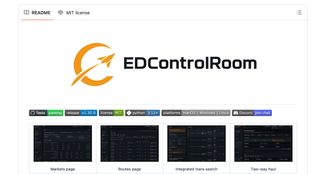
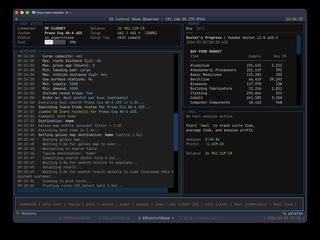
EDControlRoom in its current control-room shape.A small sneak peek at the video in progress.
I published A refresher on SwiftUI state management, async/await, and common patterns, turning a private set of interview-prep notes into a working refresher for the SwiftUI you actually meet in real codebases. It covers the pre-iOS 17 property wrappers next to their @Observable equivalents, async/await as the default for data loading, and the everyday shapes for networking, navigation, and error handling. The next entry in the Swift series, written for the version of me that has been away from SwiftUI long enough to want one page that catches him back up.
A new style of working with AI has been clicking for me lately: keeping several projects open at once, letting the main agent spawn off sub-agents per project, then hopping between them as work lands.
The glue is AGENTS.md and CLAUDE.md in each repo, which keeps every spawned agent oriented to that project's conventions while I focus on the next handoff. The loop in each project stays the same: pick a feature, write tests, document progress and findings as it goes, commit atomically.
It is genuinely engaging, more like conducting than coding, but it burns through tokens fast, especially on top-tier models like Opus 4.7 or GPT 5.5.
A few cost-saving strategies I've landed on: drop to lower-tier models where the work allows; instead of paying for the $100 tier at a single provider, take the $20 tier at both OpenAI and Anthropic and run them side by side; and lean into the fact that each model has its own strengths and weaknesses, just like any tool. It's the vim vs emacs thing again. There is no single best editor, only what suits the job in that moment (I use both, with evil-mode in Emacs as the vim layer).
Cut v1.0.0 of little-snitch-review-kit, a personal workflow I use for reviewing Little Snitch exports with an AI assistant.
The Little Snitch UI is great at intercepting one connection at a time, but it does not answer the longer questions I actually care about: what is this process talking to over a week, and which observed traffic has no explicit rule covering it.
This release bundles the analysis scripts (per-app rollups, uncovered pairs, denied traffic), the importable .lsrules builders (HaGeZi Pro and reviewed consolidation plans), and the docs and tests around the human-in-the-loop review workflow. The core constraint stays: scripts surface candidates, humans make the trust decisions.
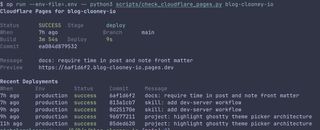
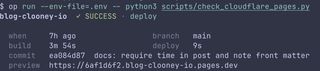
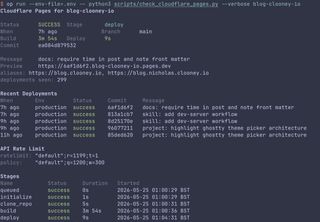
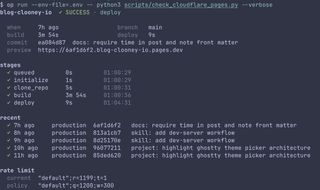
I've been iterating on scripts/check_cloudflare_pages.py, and this one ended up being a pretty clean example of where Claude currently feels stronger than Codex for TUI / UI design.
Codex got the script started and helped shape the core deployment-status workflow, but when it came to making the terminal output feel actually polished, especially across both the short and verbose views, Claude was noticeably better. At its best Codex still seems to struggle a bit with this kind of presentation work, so I ended up handing the UI pass over to Claude even though Codex had started the script.
View
Codex
Claude
Short version
Verbose version
Short and verbose output passes for the same Cloudflare Pages deployment-status script, comparing Codex against Claude.
I shipped v0.2.0 of ghostty-theme-picker, a two-column TUI theme browser for Ghostty that lets me compare dark and light themes side by side, star favorites, and keep jump history while I browse. The new release adds forward history and persistent browse state, but the engineering bit I especially like is leaning on a functional core and imperative shell, so most of the state transitions stay pure and surprisingly testable even though the app lives in the terminal. I also recorded a short demo below so I have a visual snapshot of how it feels in motion.
I keep staring at the new dotfiles project card image, generated by GPT, and getting a little mind-blown. Not only is every bit of text actually real text rather than the usual AI gibberish, the content itself coheres: the Ghostty window on the left shows plausible git aliases, the tmux pane in the middle has a believable folder listing, a git log, and a btop-style stats block, and the Emacs frame on the right has elisp in init.el and YAML in config.yml that kinda parse as real config.
And on top of that, Ghostty, tmux, and Emacs are exactly the tools I actually use, even if I haven't reached for those particular git aliases in a long, long time.
The dotfiles card image, with text that is somehow all real and coherent.
Still huh. Genuinely surprised by how far this has come.
I shipped v2026.05.2 of dotfiles as a follow-up polish pass on yesterday's tmux and Emacs reset.
This release adds a basic macOS Ghostty config, restores a bunch of the small Spacemacs habits I still wanted like fuzzy M-x, Helm buffer switching, avy motion, kj insert escape, project ripgrep search, restart and pasteboard bindings, plus YAML mode for config editing.
I also tightened the repo's own agent and release docs with AGENTS.md, CLAUDE.md, and a clearer note that these tags are chronological snapshots rather than semver, which makes the setup feel more intentional and easier to keep evolving.
I published Minimal OpenXR-OSX MVP: hello_xr on Quest from macOS, then turned it into a real end-to-end proof instead of leaving it as a plan. The note now covers the successful native macOS -> OpenXR-OSX -> Quest run, includes a short clip of the headset result, and explains that the runtime's built-in streaming server brought the Quest out of its blue standby screen into the actual hello_xr cubes scene before a later retest negotiated a real 90Hz path too. The visible drops and patchiness are documented with the important caveat that my wireless network environment was not tuned for this test, so I do not want to over-attribute those artifacts to the runtime alone.
I published Can CrossOver OpenXR Talk to OpenXR-OSX?, a follow-up note to the earlier Quest and Virtual Desktop dead-end notes. The useful part is that Elite reaching a Windows OpenXR runtime boundary in CrossOver does prove the app side is alive, but the bad news is that handing that off to OpenXR-OSX would need a custom Windows runtime shim, IPC bridge, and host-side adapter rather than a simple runtime switch.
I published Quest PCVR on Apple Silicon Mac via CrossOver and Virtual Desktop / CrossOver Findings, two notes that document the same dead end from slightly different angles. One explains why Quest PCVR from macOS through CrossOver fails at the runtime/compositor layer, and the other captures the bottle-level evidence from Virtual Desktop Streamer, SteamVR, and OpenXR probing. Together they are the version I wish I had before spending more time treating this like a tweakable game-config problem.
I published My AI-Assisted Terminal Setup: Subspace Emacs and a Tmux Layout Shortcut, the fuller write-up that ties together the tmux 70/20/10 layout and the move off Spacemacs into Subspace Emacs. It covers how Claude and Codex split the work between research and implementation, the tmux-as-TDD-harness approach that unblocked the layout binding, and the tmux/tmux#1839 discovery that finally let swap-pane preserve zoom state. This supersedes the two narrower notes from earlier today.
I published Building a Lightweight Emacs Config After Spacemacs, the fuller write-up I promised when I shipped the dotfiles update earlier today. It walks through why I left Spacemacs, what I kept (Evil, leader keys, Magit, Helm-style tracked file finding, early theme loading), and how the new ~/.emacs.d is organized as a small set of explicit modules instead of a framework.
I shipped v2026.5.1 of dotfiles, which pairs a nicer tmux workflow with the move away from the old Spacemacs setup into a smaller hand-rolled Emacs config. The tmux side gives me a one-keystroke 70/20/10 vertical layout plus a safe top-and-middle pane swap, while PR #2 keeps the core editor ergonomics I care about like Evil, leader keys, Magit, Helm-style tracked file finding, and early theme loading without the extra framework machinery. This is the point where the repo feels easier to understand and own, and I want to do a fuller write-up on the tmux and "Subspacemacs" workflow soon.
Published Tmux 70/20/10 Layout Shortcuts, a note about building a one-keystroke tmux layout that creates a stable 70/20/10 vertical stack and only allows pane swapping when the window is explicitly tagged as that layout. The useful part was not just the final run-shell binding, but the testing approach: using detached tmux sessions plus list-keys, list-panes, and show-options as a lightweight TDD harness before touching the real config. This is one piece of a broader terminal and editor workflow cleanup, and I want to write that larger tmux plus lightweight Emacs story up properly soon.
I shipped v1.34.0 of 11ty-subspace-builder, centralizing site and timeline copy in shared data files and reworking the templates to consume that data model cleanly. A lot of early Subspace work was intentionally optimized for speed and feedback loops rather than engineering neatness, but the project is big enough now that it needs better internal structure. This release feels like a step toward the right kind of guard rails: keeping the system flexible without leaving the growing timeline feature glued together by ad hoc copy and template assumptions.
Published Bypassing the Meta Horizon Link Drive Check in CrossOver, a write-up of the narrow binary patch that got Meta Horizon Link past its CrossOver drive eligibility check. The interesting part is that the patch did work, but only revealed the deeper problem: the installer depends on Windows service identity, driver, and runtime behavior that CrossOver does not provide cleanly.
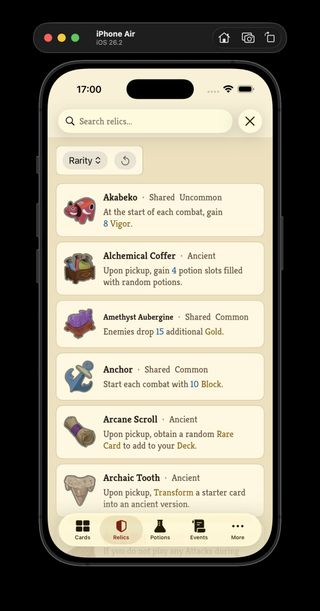
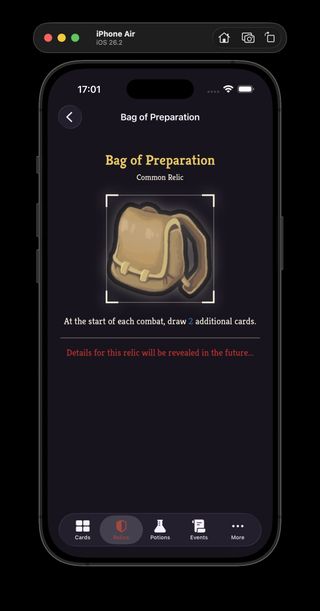
Parsed relic catalog data flowing into the Neow's Cafe relic list and detail views.
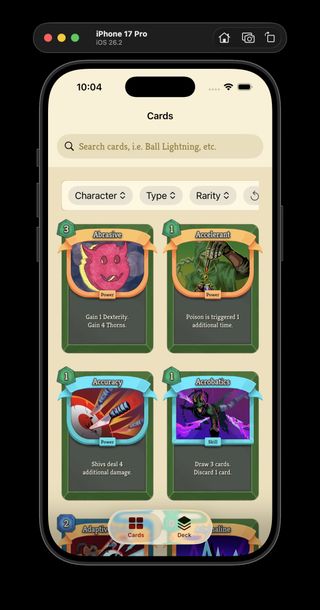
I shipped the past couple of days of ProjectSpire work as Neow's Cafe v0.4.0, Catalog Service v0.4.0, and Parser Service v0.3.0. The old card-only parser and catalog names are now broader services, the parsers cover relics, potions, events, and monsters, and Neow's Cafe has live relic list and detail screens backed by the generated catalog instead of mock data. This is the first point where ProjectSpire feels less like a card browser and more like the start of a full Slay the Spire reference app.
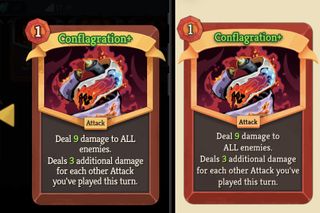
I was pixel peeping ProjectSpire against the actual game, comparing the original Slay the Spire PNG in-game with my app's q85 WebP version generated from that same source art.
Somehow, despite the game having the full-resolution PNG available, the card looks worse in-game than it does in my app.
My educated guess is that the game has its own processing and rendering pipeline, with its own constraints and reasons for the final image quality tradeoff.
I tagged a ProjectSpire snapshot for 2026-05-11, but this one feels different because I barely did any of the implementation myself.
My Codex usage is nearly gone, so Claude carried most of the work while I was busy elsewhere: parsers for relics, potions, events, and monsters; shared parser utilities; tests; and a few devlogs.
I haven't built the UIs I need to verify Claude's parser work against the actual game properly. So I don't have that confidence in its work yet without the validation.
I miss Codex and the clearer feedback loop, the back and forth, and...
Most importantly my own deeper understanding of how everything ties together.
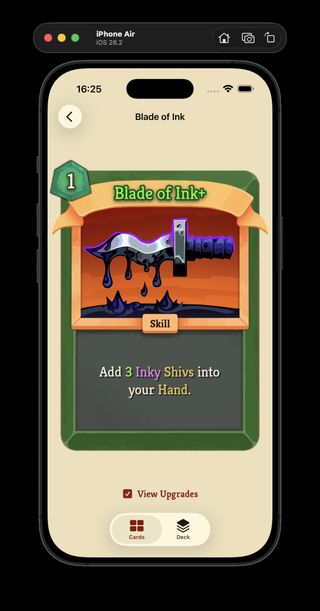
Blade of Ink now rendering its purple description text correctly.
I shipped a tiny Neow's Cafe v0.3.1 bug fix in ProjectSpire: purple was missing from the mapped text colors, so purple inline card text had nothing to resolve to. Now purple is part of the text color map, and cards like Blade of Ink can render their description highlight properly.
Published Where Do Codex's Cached Tokens Come From?, a note explaining why Codex can report millions of cached tokens after a run even when the actual prompt context is much smaller. The useful bit is that Codex's append-only agent loop keeps earlier messages as an exact stable prefix, so cache hits accumulate across repeated model calls in the same session.
Colored description text flowing from the catalog into Neow's Cafe card details.
I shipped a small combined ProjectSpire release: Card Catalog v0.3.0 and Neow's Cafe v0.3.0 now carry colored inline description text through the catalog and into the SwiftUI card views. The visible change is small, but it closes the loop from parsed game text to rendered card detail: upgraded values and highlighted terms now show with the same kind of color signal the game uses.
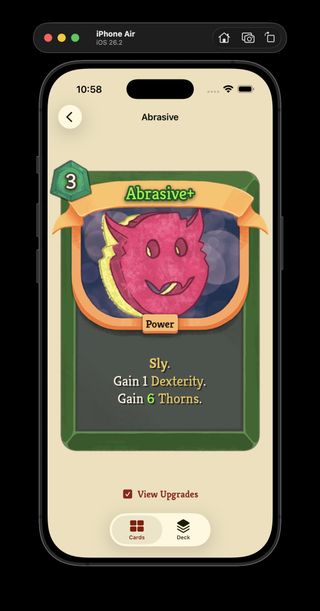
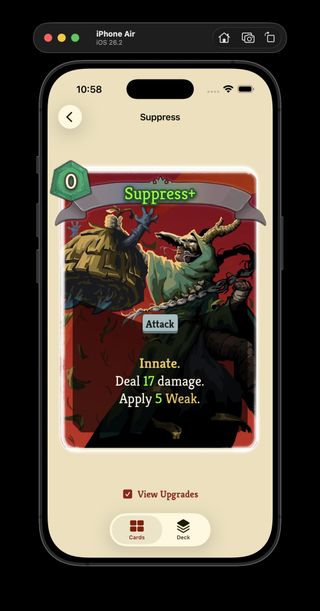
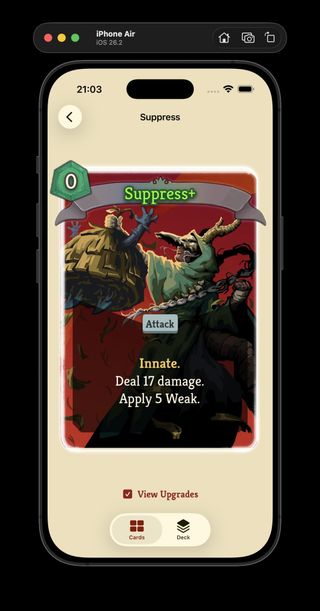
The catalog JSON now carries upgraded card values, and the app has a proper detailed card view where I can inspect those upgrades instead of only browsing the cards in their base form in the grid.
In the game, the numbers (17 and 5) in the text, would be highlighted with the color being green, because they are the upgraded from base values. That is next on my todo list.
Supress in the new detail view, with upgraded card data exposed from the catalog.
Almost running out of my weekly Codex / GPT token usage, so I switched to Claude for a few hours.
Somehow the experience feels much higher friction.
It likes to spend a long time thinking even for relatively simple tasks. For example: "write this devlog for me." It already had detailed guidance (ProjectSpire Devlogs CLAUDE.md) plus example documents in the same folder.
If it were GPT, it probably would have been done in seconds. Claude spent nearly a minute still "flabbergasting..." until I stopped it and asked what it was doing. Its response was essentially: "I was reading unnecessary documents."
Then there's the terminal behavior.
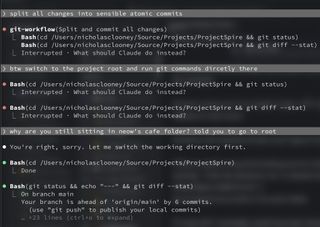
I wanted it to run some git commands, but it kept doing cd project-root && git ... everywhere. I genuinely do not understand why, because it can already execute commands from within the project context directly.
Claude, Claude, Claude...
I explicitly told it: "cd into the project root once and then run git commands directly without repeating cd." Nope. It still kept issuing (cd ... && git ...) commands until I corrected it a second time.
I'm genuinely having a hard time getting used to working with Claude. Curious what other people's experiences have been.
The parser now extracts keyword references from card text and populates a keywords field in the generated JSON, which the app picks up and renders as keyword pills on card detail views.
Status and curse cards were the most visibly broken before this: they had no keywords at all, which made a whole class of cards feel incomplete in the UI. The research behind this lives in Lab Doc 0014, which covers how keyword matching works against the game's localization data.
Neow's Cafe with the new light and dark app themes side by side.
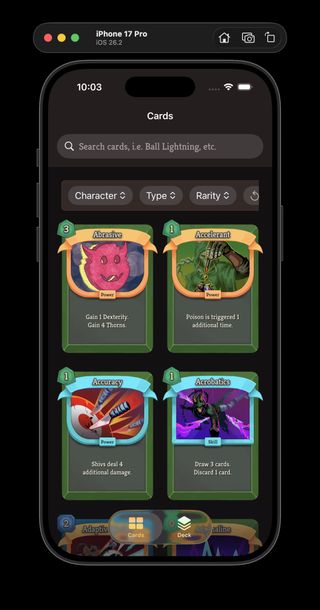
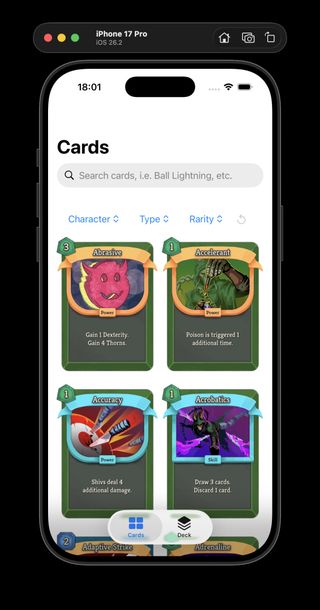
I shipped another Neow's Cafe UI pass in ProjectSpire, focused on turning the app's visual styling into reusable systems instead of one-off view code. The work in the May 7 snapshot registers the app fonts as a typography system so I can use consistent text styles anywhere in SwiftUI, and adds explicit light and dark themes for the card catalog UI. It is a small-looking change, but it gives the app a much cleaner foundation for future screens.
It uses ProjectSpire as the working example: instructions as project memory, plans for intent, Captain Logs for collaboration taste, devlogs for technical history, and skills or workflows for repeated mechanical steps.
The useful idea is that the repo should accumulate context as it is used, so the human still supplies the judgment, but the surrounding system gets better at carrying that judgment forward.
I shipped v1.33.0 of 11ty-subspace-builder, adding wrap toggles to Markdown code blocks and GitHub embeds. Markdown code blocks now wrap by default, including Markdown files rendered through GitHub embeds, while collapsed GitHub embeds still allow long lines to scroll horizontally. I also added a draft regression page for long GitHub and Markdown code lines so this behavior has a concrete page to test against.
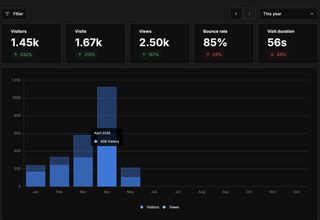
April 2026 blog traffic: 606 visitors and roughly 1.13k views.
I was surprised to find out that my blog traffic has been growing organically, with no marketing from me at all. Last month it had 606 visitors and roughly 1.13k views, which is a real WOAH moment for a personal site. Thanks to everyone who has been coming to my blog; I wish you all the best.
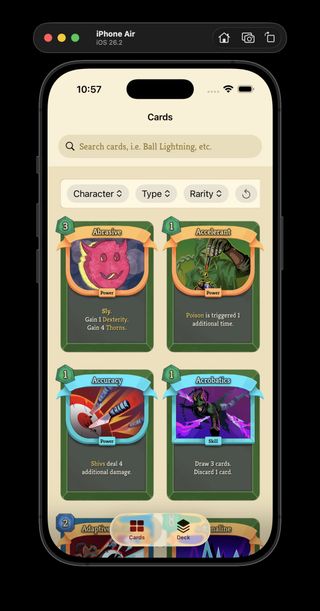
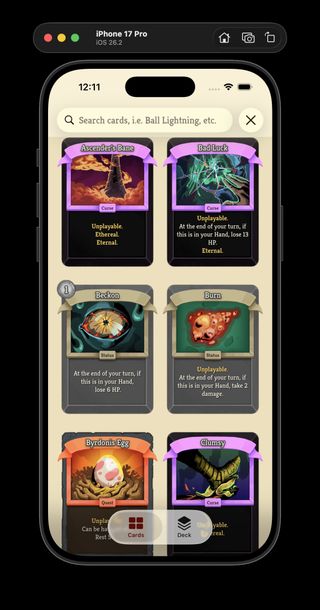
Neow's Cafe browsing catalog-backed card data instead of bundled mock cards.
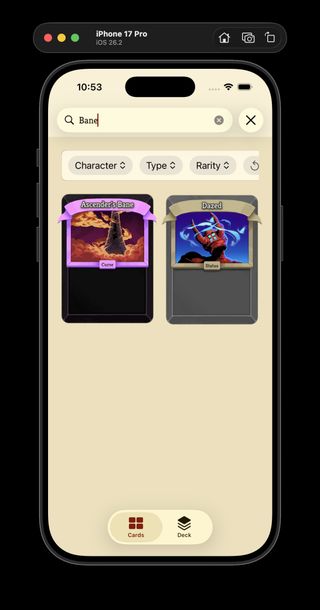
I spent today turning ProjectSpire's iOS app "Neow's Cafe" from a mock-card browser into something much closer to a real Slay the Spire 2 card catalog.
The main decision was to keep the first version boring in the best way: a static, versioned catalog generated from the game data, served locally, and loaded directly by the app instead of inventing a REST API too early.
That structure gave the app one small index for browsing and filtering, while keeping full per-card files and portrait assets nearby for detail/debug views later. The important bit is that the card grid does not need to fetch hundreds of separate files just to show the collection.
		`cards.index.json` is the grid, search, and filter payload. It contains all card summaries needed by the app:

- id
- slug
- title
- description
- energy cost
- type
- rarity
- pool
- portrait path
- optional detail path

Keep individual card JSON files for detail and debug views, not for the main grid.
On the Swift side, CardCatalogService.swift now loads manifest.json, follows it to cards.index.json, and decodes the catalog into app cards. I also removed the old bundled sample portraits, so the app is now much more dependent on the generated catalog behaving like the source of truth.
The Cards screen got some polish too: the catalog can be refreshed from the view, the grid is now a two-column layout that preserves the card aspect ratio in CardsView.swift, and I cleaned up the filter model so "no filter" is represented by optional UI state instead of fake .all enum cases (filter cleanup commit).
The other nice bit from today is process-oriented: ProjectSpire now has Captain Logs for collaboration notes and a reusable workflow for turning a day's commits and documentation changes into these timeline summaries. That should make it easier to keep writing about the work without having to rediscover the shape of the day from raw git history every time.
After a few weeks working on ProjectSpire with Codex, I’m leaning toward it as my default for software engineering projects. The main frustration has been hitting the Pro account limit; otherwise the quality has been good, the interaction feels responsive, and the output gives me instant feedback while it works. Claude Code still feels more like a black box to me: it can disappear into minutes of research and thinking on its own, and the effective limit feels lower. That tradeoff matters, because for this kind of project I want a tight engineering loop more than a long silent reasoning pass.
Shipped Card Parser v0.2.3 to ProjectSpire, which adds calculated variable resolution, numeric symbol extraction, and conditional text formatters. Cards like Ashen Strike now show computed damage values instead of raw placeholders, and I've added choose, cond, inverseDiff, and boolean formatters for rendering conditional card text. The parser now threads card type, target type, and runtime display vars (HasRider, Sapping, Energized, etc.) through text resolution, making the pipeline much more precise about card state and context.
The whole card parser has been built in this mode: I act as architect, GPT-5.5 acts as developer. Every meaningful parser improvement came from me inspecting concrete generated JSON against real card examples and asking source-fidelity questions. GPT-5.5 didn't discover that cost upgrades can be negative, or that Bash's upgraded Vulnerable value wasn't being applied, or that X-cost cards needed their own shape. I did, by reading the output and comparing it to what the game actually does.
The pattern that emerged: I'd spot a class of issue on a specific card, explain what the game source was doing and why the output was wrong, and GPT-5.5 would produce a working fix. Then I'd push to turn each discovery into a repeatable check rather than a one-off patch. The coverage audit script, the unresolved placeholder CSV, the hard failures on missing source files: all of those came from me steering toward systemic fixes after catching individual bugs.
What GPT-5.5 is good at in this loop is the mechanical throughput. Regex extraction, threading new state through a resolution pipeline, mirroring changes to the audit script, regenerating 55 JSON files, splitting work into clean commits. The domain knowledge, the quality bar, and the architectural decisions all come from the human side. GPT-5.5 doesn't know what CalculatedVar means in the game engine or why display vars like HasRider matter for conditional text. It doesn't need to, once I describe the shape of the problem clearly enough.
The productivity gain isn't just speed. It's that I can stay at the architectural level, thinking about which cards are still wrong and why, without losing momentum to implementation mechanics. The feedback loop stays tight: inspect, identify, describe, implement, verify, repeat.
Here's what a fully resolved card looks like now. Ball Lightning's resolved block shows the base and upgraded display states, with structured text runs that carry source variable references and style annotations:
I shipped v1.32.1 of 11ty-subspace-builder to fix prose link wrapping on narrow screens. Very long URLs now wrap inside the content column instead of forcing the page wider than the mobile viewport, which keeps notes and posts readable even when a raw link has nowhere graceful to break.
I worked with GPT-5.5 on a reproducible Slay the Spire 2 resource extraction plan and then landed it in ProjectSpire across the recovery scripts, allowlist, generated resource subset, image-format experiment, and workflow docs.
The Principles matter more than the files: keep the full recovered dump local and ignored, track only curated resources with a current use, make extraction scriptable instead of manual, prefer readable Python tooling, keep binary assets repo-friendly with WebP and Git LFS, and write down the decisions close to the evidence.
The implementation follows that shape by keeping Lab/unpacked/ as the local source dump and generating Lab/resources/ from Lab/resources.allowlist.yaml, starting with localization plus WebP q85 card portraits.
That gives my STS2 projects inside the ProjectSpire monorepo access to assets like this at roughly a fraction of the original size, around 10%, without needing to commit the full recovered dump.
One of the recovered card portraits from the first curated resource subset.
I shipped generated Open Graph cards for the timeline in v1.32.0 of 11ty-subspace-builder. The root timeline page and individual timeline entries now get social preview images from generated card data, while static card metadata lives in site data so downstream projects can configure it without touching templates. I also updated the timeline docs to spell out how those preview images are selected.
I added a ProjectSpire design note in 399f74d that pushes the card pipeline toward a two-pass model: keep the parser output source-faithful, then resolve localization and rendered text separately for the app.
I created that work with GPT-5.5 in plan mode, and it asked a few genuinely useful clarification questions before I let it draft anything substantial, which made the whole process feel a lot more controlled than a blind codegen pass. I also pushed back on several of its first suggestions and made a lot of the consequential decisions myself, especially around keeping canonical variable names intact and separating raw data from resolved display data. That feels like a strong pattern for future ProjectSpire work: use the AI models to widen the search space, but keep the architecture decisions and edits grounded in my own judgment.
I published Slip, Slop, Slap vs. Going Pink: Why Australia and the UK Treat Sun Safety So Differently, a note on why Australia and the UK treat sun safety so differently and why the mortality numbers are more surprising than the incidence numbers. The observations are mine; AI handled the research and wrote the first draft, and I edited the result before publishing.
I published The Brain That Grew — Then Shrunk: What I Just Discovered, a long-form note that starts from a Cleo Abram YouTube Short and then follows the research on human brain evolution, the unexpected Holocene shrinkage, and the idea that culture may have taken over part of the cognitive load. It is the kind of rabbit hole post I like writing here: one short video, a lot of reading, and a sharper takeaway than I expected.
I’ve been working on ProjectSpire’s iOS app (codename: Neow’s Cafe) in NicholasClooney/ProjectSpire as a 1:1 Slay the Spire 2 card library, and the useful part is not just the filtering UI and refactor cleanup, but the way I’m trying to work with AI.
I get better results when I lay down the foundations myself first, especially around quality, guard rails, and how the data is modeled, and then let AI work inside that framework instead of asking it to define the framework for me. It also helps a lot when I have AI propose higher-level API or contract changes before it starts making edits.
Here's a snapshot of the visual changes. There is also quite a bit of non-visual work too, like reorganizing the source files into clearer areas such as App, Components, Models, Views, Logic, and Dependencies, splitting the banner text into its own component, moving the app toward injected dependencies instead of hardcoded wiring, and a few other things.
The useful part is not just the snippets themselves, but that AI agents researched the best practices, produced the example code, organized the project, and left me with a runnable playground where I can compare equal-width stacks, GeometryReader, PreferenceKey, and some surprisingly similar results against my actual needs.
I published The Confident Lie: What AI Got Wrong About @ViewBuilder, a SwiftUI debugging note that came out of the ProjectSpire card view work. It captures a small but useful lesson: body gets @ViewBuilder from the View protocol, but a custom computed some View property needs the annotation explicitly if I want an if without an else. The compiler was right, the AI was overconfident, and now the mistake is written down somewhere I can find again.
I’ve moved the SwiftUI card view forward by adding a real Card model, so even though the screen does not look dramatically different yet, the app is much closer to rendering cards from extracted data instead of hardcoded values. There is even a small visual regression in the golden text compared with the previous screenshot, but the important change is underneath: I can now refine the card parser and JSON output models, bring those records and required images directly into the app, and aim to emulate any card regardless of rarity, type, or data shape. The relevant work is in the ProjectSpire compare for the card view changes and the new card model.
New Card model version.Previous visual pass for comparison.
I’m really happy that I built the timeline feature into my blog, because it gives me an easy way to write about little moments and keep them somewhere permanent, platform agnostic, and accessible without any kind of paywall or login wall. The ProjectSpire SwiftUI card view WIP entry is exactly the kind of thing I wanted this for: a small progress record I can send to friends and family without needing it to be a full post or trapped inside a social feed.
I’m recreating the Slay the Spire 2 card view in SwiftUI with assets extracted from the game, and I’m very happy with how close the first pass feels. The current work is captured in ProjectSpire snapshot/2026-04-28, especially CardView.swift; most of it is still hardcoded, but the visual foundation is there. Next I want to generalize it so the view can take a card data object and dynamically reload the text, colors, and assets, which might eventually turn into a Slay the Spire wiki app for the phone.
I published Why You Feel More Tired During the Day Than at Night, a practical explanation of the afternoon slump, the evening second wind, and the push-pull between sleep pressure and circadian alerting. The useful takeaway is simple: protect sleep quality, get morning light, move during the day, and be deliberate about caffeine timing.
I published Localization Formatters - Slay The Spire 2 Research Note, a ProjectSpire note on how card localization formatter functions such as diff() are resolved and applied. GPT-5.5 researched and wrote the note, and I am honestly amazed by how well and how quickly it produced a detailed explanation from decompiled sources in minutes. This is exactly the kind of agent-assisted research loop that makes ProjectSpire feel much more possible.
I published Three ways to pass an @Observable object in SwiftUI, a short SwiftUI reference for choosing between environment injection, direct initializer passing, and @Binding. It keeps the distinction focused on ownership and coupling: whole-object reference sharing when the child is allowed to know the model, or a projected binding when the child should only see one value.
I pushed 1263f2d to SwiftyBites as a Friday-night AsyncDebounceDemo for playing with Swift's async and sync edges. The demo compares a view-owned async .task flow with a synchronous button action that cancels and restarts a stored Task, which makes the debounce mechanics feel a lot more concrete than just reading the pattern.
I updated SwiftUI in the Wild: Memory, Concurrency, and the Gaps in the Docs with a clearer explanation of using .task(id:) for debounced work. The change moves that pattern into the debounce section, where SwiftUI's automatic cancellation model fits naturally, and keeps the button-action section focused on manual task ownership tradeoffs.
I published Godot + .NET Internals: PCK Files, Dual Runtimes, and Why Decompiled C# Looks Terrible as a note for Slay the Spire 2 modding work. The useful distinction is that Godot mounts the .pck for its own virtual filesystem while CoreCLR loads the .dll from disk, which also explains why source recovered from the .pck reads cleaner than reconstructed C# from a decompiler.
I published SwiftUI in the Wild: Memory, Concurrency, and the Gaps in the Docs, a field guide to the parts of modern SwiftUI + concurrency that look clean in isolation but get messy in real apps. The post covers @State + @Observable lifetime bugs, debouncing with async/await, task ownership in views and buttons, closure capture cycles, and why @Observable and actor pull in different architectural directions.
I’ve been working since last night and today with agents to document how Slay the Spire 2 works, prototype a Spire API and a REST API on top of it, and shape a WIP card parser that turns C# into JSON structures. That work is captured in ProjectSpire snapshot/2026-04-19, which gives me a concrete snapshot of the game model and tooling so far.
I shipped dedicated archive index pages in v1.30.0 of 11ty-subspace-builder, including a timeline months index alongside the earlier weeks index. It also tightens up the shared archive navigation, which makes the timeline's growing set of month and week views feel more connected instead of like isolated pages.
I shipped a dedicated /timeline/weeks/ index in v1.29.0 of 11ty-subspace-builder. It groups both month-banded weeks and ISO calendar weeks by month, includes entry counts on each link, and makes the older week archive pages easier to browse without already knowing the exact week key.
I shipped timeline topic archive pages under /timeline/:topic/ in v1.28.0 of 11ty-subspace-builder. Topic tags on timeline entries now link into that namespace, which makes it easier to follow one thread of work across time without losing the main chronological feed.
I’m thinking about a timeline-specific tags page at /timeline/tags/<tag>/ so I can group related entries together and follow one topic across time without losing the chronological context. It would make the timeline feel a little more like a long-running notebook for a single idea instead of only a straight feed.
Shipped a fix for the timeline entry detail view in v1.27.1 of 11ty-subspace-builder. Earlier in thread now includes older siblings from the same branch and keeps the nearest prior entry closest to the current one instead of flipping the thread upside down.
Shipped GitHub-style collapse and expand controls for long Markdown code blocks in v1.27.0 of 11ty-subspace-builder. The release also reuses that shared copy-and-collapse behavior for regular fenced code blocks, which keeps the interaction consistent instead of treating Markdown blocks as a separate case.
I shipped month archive pages for timeline entries, month-banded week archive pages under /timeline/weeks/, and ISO calendar week archives in v1.26.0 of 11ty-subspace-builder. That gives the timeline a few more ways to browse older entries without flattening the chronological flow.
Published The Accelerated Speed of Creation, a reflection on how much faster the path from thought to shipped artifact has become with coding agents handling the translation layer around writing, blog workflow, and routine Git operations. I also kept the earlier Encoding My Blog Workflow for Coding Agents draft as a note rather than a post, because it was useful and concrete but still did not meet my standard for what the real piece needed to be.
Shipped theme mode control and delayed previews in v1.25.0 of 11ty-subspace-builder. The new theme switch adds explicit auto, light, and dark modes instead of treating the site theme as a hidden implementation detail, and delayed previews make hover previews configurable so they feel less jumpy when moving around a page.
rtc-bridge — TCP tunneling from a browser, explained is up. I wrote down the WebRTC signaling path, the node/coordinator/browser split, and the auth gap I think matters most before anyone uses it for sensitive services. I also compared it to my Tailscale + Caddy setup so the trade-offs stay concrete.
I split the blog editing rules into repo-local skills in 22c4d7d. post-and-note-workflow now makes the timeline-entry rule explicit, while frontmatter-editing routes posts/, notes/, and timeline/ to canonical front matter docs instead of burying that guidance in CLAUDE.blog.md. I also cleaned up timeline-entry so its tag guidance matches the repo defaults.
I published WebRTC — How it actually works as a note on how signaling, STUN/TURN, ICE, DTLS, and SRTP fit together. The useful framing here is that WebRTC is not just "peer-to-peer"; it is a browser-owned transport stack wrapped around signaling and fallback infrastructure you still have to run.
I published Smart AI Token Consumption as a note on matching model choice to task complexity instead of defaulting to the biggest model. It captures the split I keep using in practice: light models for mechanical work, stronger reasoning only when the problem actually needs it.
I published Getting Pulled Into the Ethereum Ecosystem (From a Digital Garden Perspective) after a 3am rabbit hole with Andrew about Ethereum, trust models, and what a markdown blog can borrow from a ledger. It is less a crypto post than a thinking-out-loud piece about verification, shared state, and the difference between controlling a history and publishing into one. I’m treating it as the first step toward a small on-chain/off-chain experiment rather than a full web3 shift.
Published the first follow-up entry in the new threaded timeline model.
Timeline entries can now point back to earlier entries, which turns the feed into more of a build log than a flat list. This update continues from the original timeline launch and marks the point where parent and follow-up relationships became part of the feature.
I’ve set up ProjectSpire Lab so I can run a script that pulls a decompiled copy of Slay the Spire 2 for local experimentation; the game code itself stays out of Git because I do not have a license to commit it. The setup lives in NicholasClooney/ProjectSpire. It gives me a clean foundation to build mod tooling from.
This grows out of Cloudflare Build Notifications via Email Routing and Email Worker, but I’m now moving the Email Worker out of the Cloudflare dashboard editor and into Git in NicholasClooney/cloudflare-email-to-webhook-worker. The goal is to keep the worker version controlled, review changes before deploys, test locally, and configure it with Wrangler instead of only editing it in the Cloudflare web UI. Right now it is still mostly Wrangler init plus the example email worker, but that is a solid foundation to build from.
I created git-activity in a631c98 so I can quickly answer "what have I been working on?" It walks a directory tree, finds the Git repos underneath it, and shows the latest log entries from each one in a single pass. It also supports a few filters, which is handy when I only want to review a slice of recent work; for example, from my projects folder I can run:
git-activity -r blog -m feat -x chore
That recursively scans repos, focuses on feature work, and leaves chores out of the list.
I moved the timeline-entry workflow into a repo-local skill in f7fceef. It now sits at .claude/skills/timeline-entry/SKILL.md, with the date/time quoting rules, status tags, and commit-based workflow close to the files it writes.
I published The Limits of AI and Where Humans Shine — a devlog about a tiny timeline sorting bug that turned into a useful comparison between AI confidence, runtime verification, and human judgement. It follows the fix from plausible-but-wrong timestamp changes to a quoted-date guard that keeps the timeline honest.
I added a /release skill to 11ty-subspace-builder in f1cb3a3. It captures the release ritual in one place: choose the semver bump, update package.json, commit chore: release vX.Y.Z, push, and create the GitHub release with the right title, body, and compare link.
I’m recording the ProjectSpire ideas now even though they’ve been rattling around for a while: an unofficial SpireAPI for mods, a REST layer on top of it, and a voice-command/accessibility layer that could eventually add Whisper-backed recognition and text-to-speech. Writing them down gives me one place to grow the monorepo instead of leaving the ideas scattered in my head.
Published What's Worth Keeping: On Humanness in the Age of AI — a post on what I've been thinking about since attending a thought experiment session on AI and skill erosion. It's about the parts of humanness I think are genuinely worth protecting — junior skill-building, critical thinking, forming a view before outsourcing it — and what I actually try to do in my own daily use of AI tools.
Added a personal timeline feed to the site. Markdown files in timeline/, same front matter as posts. Color is tag-driven: shipped goes green, published goes blue, thinking goes amber — no extra fields needed.
Added random month navigation in v1.3.0 of project-etho — a button that jumps to a random month's content rather than always landing on the latest. Good for surfacing older stuff without having to browse manually.
Published A Small Digital Garden That Feels Like Home — a reflective post on what it means to tend a personal site: slow accumulation, things planted for yourself rather than an audience, and why that feels different from posting anywhere else.
Fixed OG image generation for Chinese text in v1.21.1 of 11ty-subspace-builder — social cards were silently dropping CJK characters, now they render correctly.
Published a note on homemade hash browns, two ways — the kind of thing I keep wanting to look up and never find written the way I remember it, so I wrote it down myself.
Added copy buttons to long fenced code blocks in v1.21.0 of 11ty-subspace-builder. Short snippets don't get one — only blocks long enough that scrolling to copy is annoying.
Code blocks and GitHub embeds now follow the runtime theme in v1.19.0 of 11ty-subspace-builder. If a visitor switches between light and dark, the embeds switch with them rather than staying hardcoded.
Shipped a lightweight notes section in v1.19.0 of 11ty-subspace-builder — short-form content separate from posts, with its own collection and OG image support so each note gets a proper social card.
Starting a captain's log. Shipped things, published writing, half-formed thoughts — all in one place, in order, no categories needed. Let's see how it goes.